
How to Choose an Online Music Teacher in the UK: 7 Checks

Choosing an online music teacher in the UK is harder than choosing a local one, because you cannot watch a lesson before you pay for it. You are judging a website. After teaching since 1992 — in person and online, to students in London, Glasgow and Leeds — these are the seven checks I would want any parent or adult beginner to run before booking. None of them take longer than a few minutes.
The seven checks
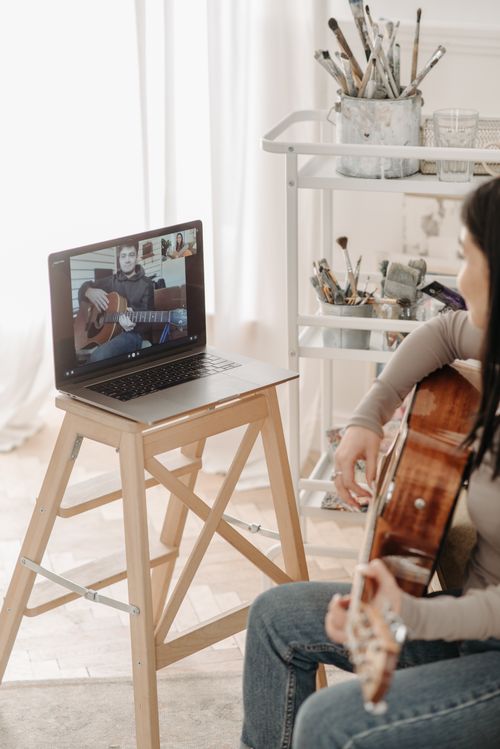
- Is it the same teacher every week? This matters more than anything else on this list. A rotating tutor means restarting every term. Ask directly: will my child have the same teacher in six months?
- What are the qualifications, and can they be checked? A named degree, a named institution, a year. Mine is a PhD in World Music from Oxford (2008); the about page sets out the teaching record behind it.
- Is the lesson live and one-to-one? A library of videos is not a lesson. If nobody corrects your hand position, you are not being taught.
- What is the full UK plan total and class length? Check the amount in pounds, how many classes it includes, the length of each class and what the written terms say. My current plan totals are on the fees page.
- Can you try before you pay? A real teacher can afford a free one-to-one introduction. A sales funnel offers a "consultation call".
- Is there a route to exams if you want one? Ask whether they prepare for ABRSM, Trinity or Rockschool — and whether the Grade 5 theory requirement is explained to you before you start Grades 6 to 8.
- What happens between lessons? Progress is decided on the six days you are not in the lesson. Ask what you get: notes, a practice clip, a way to ask a question.
Red flags worth walking away from
- The teacher is not named. If the site says "our expert tutors", you will not know who turns up.
- Pricing needs a phone call. Honest fees are published — monthly plan, £72 per month for 8 classes, £48 per student monthly for eight fixed group classes.
- Contracts rather than lessons. A yearly commitment before the first lesson is a retention tactic, not a teaching decision.
- Exam promises. No teacher can promise a distinction. They can promise preparation.
- No way to reschedule. Children get ill, shift rotas change. Ask before you pay.
Questions to ask on the first call

- "What will my child be able to play in three months?" — a real teacher gives a specific answer, not "it depends".
- "How do you correct technique over video?" — camera angle, slow demonstration, recorded clips.
- "What do you expect between lessons?" — twenty minutes a day is the honest answer for a beginner.
- "What happens if we need to stop for a term?" — One-to-one pauses follow the published policy: unused classes normally remain valid for two months; new-plan pauses before a paid class are agreed case by case.
What the checks are really for
Every one of these checks is a proxy for one question: will this still be working in a year? Music is not learned in a month. The families who get value are the ones who find a teacher they can stay with, at a price they can sustain, for long enough for the practice to compound. That is the whole calculation.
For reference, the UK's own exam boards publish their syllabi openly — ABRSM, Trinity College London and RSL Awards (Rockschool). A teacher who knows those syllabi inside out is a teacher with somewhere to take you.
How do I know if an online music teacher is qualified?
Look for a named qualification from a named institution, with a year — and a public record that matches it: releases, books, a teaching history. Vague claims like "certified tutor" are not qualifications.
Is a marketplace teacher or a private teacher better?
Ask who will teach each lesson, whether the same teacher will continue, and how you can contact them if plans change. If you value continuity, confirm that arrangement before you enrol.
Should I choose a UK-based teacher or one abroad?
Consider the teaching, time zone, communication and whether the schedule works for you. Lessons here run at mutually agreed times, subject to available slots and agreement whether the student is in Cardiff or Cambridge — the whole country keeps one clock.
How much should online music lessons cost in the UK?
One-to-one monthly plans are 4 classes for £40, 8 for £72 or 12 for £102; each class is 45–60 minutes. Group is eight fixed classes monthly for £48 per student, 60–90 minutes each, in batches of 5–8. Payment is in advance by PayPal, Remitly or Western Union. The free introductory lesson is one-to-one and 15–30 minutes.
Try a lesson before you decide.
One live lesson, one-to-one with me, 15 to 30 minutes, and it is free. If it is not for you, nothing is owed.