
Online vs In-Person Music Lessons in the UK: An Honest Comparison
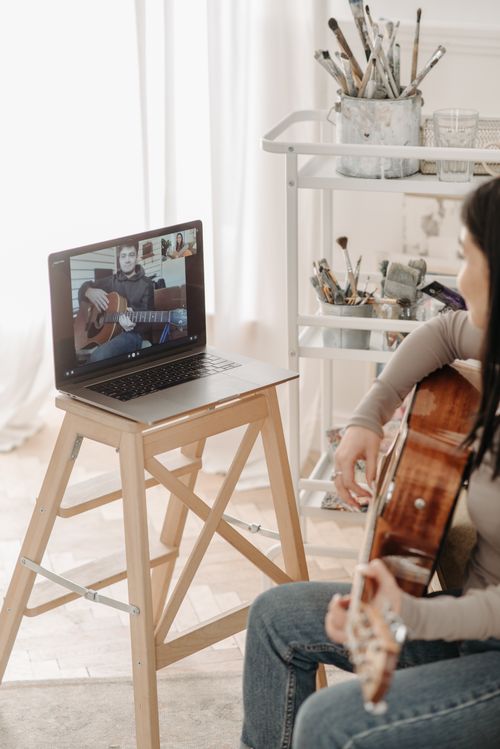
Every UK family weighing music lessons eventually asks the same question: online or in person? It is worth answering honestly, because the true answer is not the one most music schools advertise. Both formats work. The deciding factors are narrower than the marketing suggests — and one of them matters more than all the rest.
Compare the format, not just the headline
When comparing online and in-person offers, check the lesson length, one-to-one or group format, teacher continuity, travel, schedule and cancellation terms. A monthly plan is not directly comparable with an hourly or per-session quote unless the duration and format are also clear. My current UK plan totals and class lengths are listed on the fees page.
The variable that actually matters: the teacher
Format does not teach anyone. Teachers do. In London or Manchester, the local pool is deep; the work is choosing well. In a small town — or for a specific need like Indian classical, ABRSM theory, or a teacher who can do both — the local pool can be one person or none. Online removes that lottery: you choose from the whole country's teachers, hear them in a free demo, and keep the one who clicks.
The reverse is also true: online does not fix a mediocre teacher. A rotating marketplace tutor is no better through a screen. Choose the teacher first; the format is a delivery decision.
What online does better
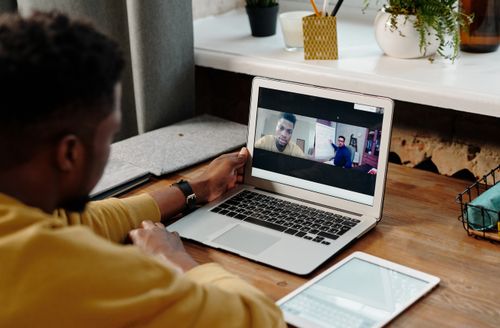
- No commute, no weather. In January, a lesson that happens at home beats driving across the city — and it never gets cancelled by a snow day.
- An agreed lesson routine. Consistency helps grades, while individual dates can be arranged flexibly by agreement.
- Personal practice recordings. The teacher does not record lessons; students may record for personal practice after telling the teacher and, where needed, obtaining guardian and participant permission.
- Shy students often bloom. Singing or playing from your own room, one-to-one, is a kinder start than a waiting room and a stranger's studio.
- Siblings and parents. Two children can take back-to-back lessons at home; a parent can quietly listen in — which in-person rarely allows.
What in-person does better
- Very young beginners. Below seven I do not take students, so the youngest beginners start online like everyone else — and it works, because hand position and posture are shown close up on camera and a parent can sit beside them.
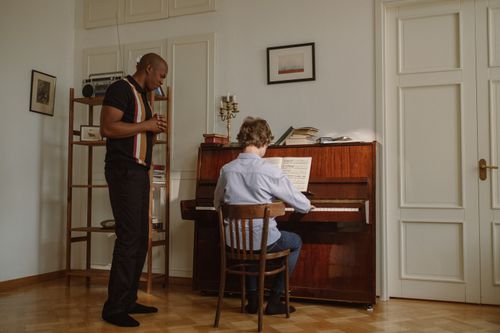
- Playing with others. Ensembles, bands, jamming — that is a room full of people by definition. Lessons complement it; they do not replace it.
- Instrument setup and repair questions are easier when the teacher can hold the thing.
- Voice students heading to exams benefit from easy access to an accompanist, which is usually a local arrangement.
Exams, auditions and the hybrid answer
For exam preparation — ABRSM practical and theory, school auditions — the format of the lessons barely matters; the discipline of weekly preparation does. The exam is taken in person at an ABRSM centre either way. Many families run a hybrid: weekly online lessons for technique, repertoire and theory, plus occasional in-person workshops, group jams or a school band for ensemble playing. That combination gets the consistency of online with the rooms-and-people benefits of in-person.
So which should you choose?
- Child aged 7, just starting: online, with a named teacher who shows hand position and posture close up — and a parent sitting in for the first few weeks.
- Child aged 7+ or teenager: online, with a named teacher, unless a superb local teacher is ten minutes away.
- Family in a small town or rural area: online — it is the only way to choose your teacher rather than settle for whoever is nearby.
- Adult returning to music: online wins on schedule alone; timings that fit around work are the whole game.
- ABRSM or theory students: either format, chosen by teacher quality — with theory support built into lessons.
- Families comparing budgets: check class length, how often lessons take place, travel costs and whether the offer is one-to-one or group. The UK fees page lists this tutor’s monthly totals and class lengths.
Do online lessons actually work for children?
From age 7 and above, yes — children take to screens naturally, and a good teacher uses the camera well (hands and posture visible, short focused segments, songs the child likes). Parents often sit in for the first weeks.
What equipment do I need?
A phone, tablet or laptop with a camera and an internet connection — plus the instrument, or just a voice for singing. A holder or stand for the device helps; nothing else is required.
What do online lessons cost here?
One-to-one monthly plans are 4 classes for £40, 8 for £72 or 12 for £102; each lasts 45–60 minutes. Group is eight fixed classes monthly for £48 per student, 60–90 minutes each, in batches of 5–8. Payment is in advance by PayPal, Remitly or Western Union.
Can my child prepare for ABRSM exams online?
Yes — preparation, theory and mock exams all work online; the exam itself is taken in person at an ABRSM examination centre, which families register for directly.
What if I try it and it is not right?
The free one-to-one introduction is a live 15–30-minute class before normal enrolment and payment. If the format does not suit your child, you will know in that first class, and nothing is owed.