
Learning Music as an Adult Beginner in the UK
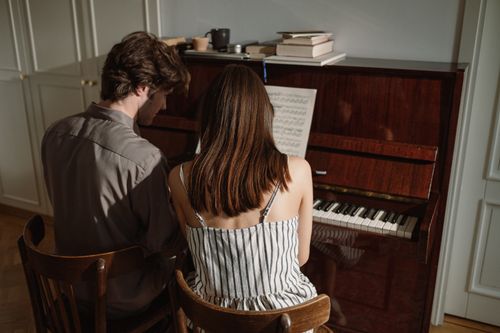
The most common thing an adult beginner says to me is "I'm too old to start", usually at forty-something, sometimes at seventy. It is not true, and I can say that from thirty-four years of teaching. Learning music as an adult is different from learning as a child — not slower. Adults understand what a key signature is on the first explanation; children need six. Adults choose their own repertoire, which means they practise. What adults lack is not capacity. It is time, and permission to be bad at something in front of someone.
What adults do better than children
- You understand concepts immediately — a semitone is a semitone, and you do not need it explained four times.
- You chose this. Nobody's parent is making you practise, which is worth more than any amount of natural aptitude.
- You can hear when something is wrong, which is the beginning of an ear.
- You can sit still through a 45 to 60 minute lesson and remember what was said.
- You know what you like. Repertoire is the difference between practice and duty.
The first eight weeks
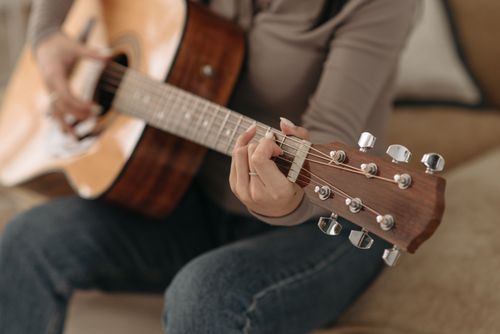
| Weeks | What happens | How it feels |
|---|---|---|
| 1–2 | Posture, tuning, three or four notes or chords, one simple piece | Awkward hands, surprising progress |
| 3–4 | First real piece with two hands or a full strum pattern | The first time it sounds like music |
| 5–6 | Reading starts; practice becomes a habit rather than a decision | The wobble — most people quit here |
| 7–8 | Three pieces in the repertoire, playing along with a recording | It starts to feel like yours |
The three habits that stop adults
- Practising in long weekend bursts. Twenty minutes on five days beats two hours on a Sunday, every time.
- Comparing yourself to players of twenty years. Compare yourself to yourself three months ago.
- Waiting until you are "good enough" to play for someone. Play for someone in week three. It is the single best motivator there is.
Fitting it around real life
Most adult students I teach in the UK are working — some on shifts, some with commutes, many with children whose homework comes first. That is exactly why the lessons are one-to-one and scheduled in your local time — One-to-one lessons can be scheduled 24/7, subject to available slots and mutual agreement. Days and times are agreed before enrolment; individual calendar dates can be arranged flexibly later. Group classes follow their fixed batch schedule. A 6.30am lesson before a shift and a 9pm lesson after the children are in bed are both ordinary here. If you would rather learn with other adults, there are adults' group batches. Details and the honest price are on the fees page.
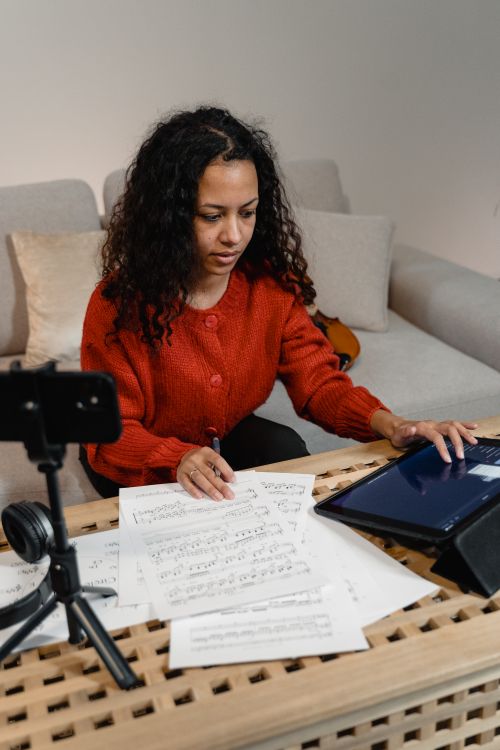
One more thing worth saying: learning an instrument as an adult is one of the few activities that reliably gets easier the longer you do it, because the only real prerequisite is turning up. And if you want a benchmark, the graded routes run through ABRSM and Trinity College London — neither has an age limit.
Am I too old to learn an instrument?
No. I have taught adult beginners in their sixties and seventies who reached Grade 3 within two years. There is no age at which the brain stops being able to learn music.
How much should an adult practise?
Twenty minutes a day, five days a week. If that is impossible, three sessions of fifteen minutes still works.
Should I learn on my own or with a teacher?
Self-teaching works until it doesn't — usually around month three, when habits set. One lesson a fortnight with a teacher is enough for most adults.
What instrument is easiest for an adult beginner?
Ukulele for the fastest first song, piano for the clearest layout, guitar for the most repertoire, singing for no equipment at all.
Can I learn if I work shifts?
Yes. One-to-one lessons can be scheduled 24/7, subject to available slots and mutual agreement. Days and times are agreed before enrolment; individual calendar dates can be arranged flexibly later. Group classes follow their fixed batch schedule. For one-to-one classes, a paid class counts as taught only when the tutor delivers it and the student attends. At least 12 hours’ written WhatsApp or email notice before the scheduled start (exactly 12 hours qualifies) allows a free replacement by mutual agreement: the missed slot is not counted as used, and the agreed replacement counts when taught and attended. With less than 12 hours’ notice or no notice, including a no-show, the missed slot normally counts as used, subject to applicable rights and fairness, but it is not a class taught. A later, separately agreed plan class counts when taught and attended; a replacement is not automatically promised for a slot already counted as used. This one-to-one rule does not apply to fixed-batch group classes.
Related
- Online music lessons for adults in the UK
- Fees and monthly plans
- Western music lessons — guitar, piano, singing
Try a lesson before you decide.
One live lesson, one-to-one with me, 15 to 30 minutes, and it is free. If it is not for you, nothing is owed.