
How to Practise Music: 20 Minutes a Day That Actually Works
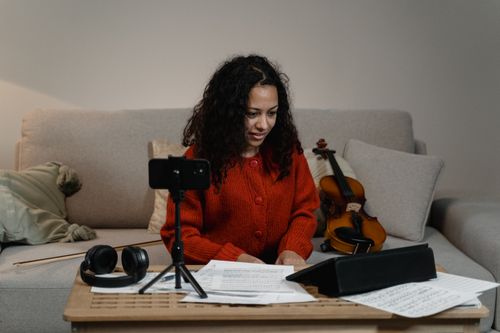
Almost every student I meet practises by playing through the pieces they already know, from the beginning, until it is time to stop. It feels productive. It is the single biggest reason students plateau. Playing through is a performance, not practice. Practice is the deliberate, slightly uncomfortable business of working on the bit that does not work yet — and twenty minutes of it, done daily, beats an hour at the weekend.
The twenty-minute split
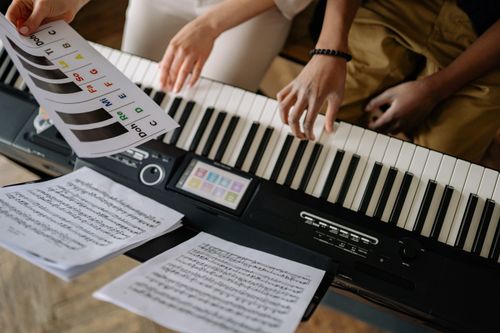
| Minutes | What to do | Why |
|---|---|---|
| 0–3 | Warm up: scales, long tones, or a familiar piece slowly | Wakes the hands and the ear without judgement |
| 3–8 | Technique: the specific change, scale or pattern set last lesson | This is where progress actually happens |
| 8–14 | The hard bar. Isolate the two bars that fall apart and loop them | Targeted repetition of the difficult bit, not the whole piece |
| 14–18 | Repertoire: play the piece you are learning, start to finish | Puts the repaired bar back in context |
| 18–20 | Play something you love, badly if necessary | This is what makes you come back tomorrow |
How to fix a bar that keeps failing
Not "the chorus" — the transition between two specific chords or notes. It is almost always a change, not a note.
If you cannot play it cleanly at 60bpm, you cannot play it at 100. Perfection at slow tempo first.
Five clean repetitions in a row. Not five attempts — five successes.
Two bars before, the repaired bit, two bars after. Then the whole phrase.
Four clicks at a time on the metronome. Never jump.
The mistakes that waste practice time
- Starting from the beginning every time. The beginning gets fluent; the third line stays terrible.
- Practising without a metronome. You are not practising the piece, you are practising hesitating in it.
- Playing through mistakes. Every time you play through an error you practise the error.
- Only practising the songs you like. Keep the technique slot. It is what makes next month's songs possible.
- Stopping when it gets hard. That is the precise moment practice begins.
Building the habit
Put practice where something else already lives — after breakfast, before the school run, when the kettle boils in the evening. Twenty minutes, same time, on your practice days. And tell someone: a weekly lesson with a teacher who asks what you worked on is the most reliable accountability device there is. One-to-one lessons can be scheduled 24/7, subject to available slots and mutual agreement. Days and times are agreed before enrolment; individual calendar dates can be arranged flexibly later. Group classes follow their fixed batch schedule. If you would rather work alongside others, the group classes run on a fixed schedule. What the twenty minutes above are really doing is what researchers call deliberate practice — short, focused, and aimed squarely at the thing you cannot yet do.
How long should a beginner practise each day?
Twenty minutes, five days a week. Ten minutes for children under eight. Consistency matters far more than duration.
Should I practise regularly?
Yes, ideally. Five short sessions beat one long one — the brain consolidates motor learning overnight.
What if I don't have twenty minutes?
Practise for ten, but do the technique bit. Ten targeted minutes is worth more than twenty unfocused ones.
Is a metronome really necessary?
Yes. Timing is the difference between playing music and making noises, and it is the habit most self-taught players lack.
How do I practise singing?
Warm up first — humming and lip trills before anything else — and keep sessions short. Twenty minutes of careful singing beats an hour that tires the voice.
Try a lesson before you decide.
One live lesson, one-to-one with me, 15 to 30 minutes, and it is free. If it is not for you, nothing is owed.