
GCSE Music Online Tutor (UK)

Are you looking for a GCSE Music online tutor UK pupils can learn with from home? Start with the specification and assessment plan used by the student’s school. GCSE Music is a secondary-school qualification in England, Wales and Northern Ireland; other parts of the UK may follow different qualification routes. The exam board, course content, submission format and deadlines depend on the school and the specification it teaches.
What GCSE Music usually involves
Most courses bring together practical performance, composition and listening or appraising. The exact balance, task instructions and assessment criteria differ between awarding organisations and course specifications. A school may set pieces, instruments, software, ensemble arrangements or recording rules that an outside tutor cannot change.

Ask the music department for the specification name or code, assessment dates, required repertoire, composition brief, performance length and submission format. For example, check whether a performance must be live, recorded, solo or ensemble, and whether the school has particular equipment or file requirements.
Where one-to-one tutoring can help
Online 1:1 preparation can give a student a regular place to work through musical goals alongside school teaching. Depending on the course and the learner’s needs, lesson time might focus on reading a score, listening carefully, strengthening rhythm and pitch, planning a composition, or practising a performance for confidence and control.
- Break a teacher-approved task into small, manageable steps.
- Practise explaining musical choices using the language in the specification.
- Build a realistic practice plan around school rehearsals and due dates.
- Review feedback from school and turn it into the next practice goal.
Tutoring should support the student’s learning, not replace the school’s directions or write assessed work for them. Keep the school’s rules about permitted help, software and submissions in view.
Choosing an online tutor
Before booking, share the board and specification, the student’s instrument or voice, current work and the kind of support they want. A flexible online 1:1 session can adapt as priorities change, but the school remains the source of truth for assessment requirements. Use a device with a camera and microphone, a stable connection, and the sheet music or task brief where permitted.
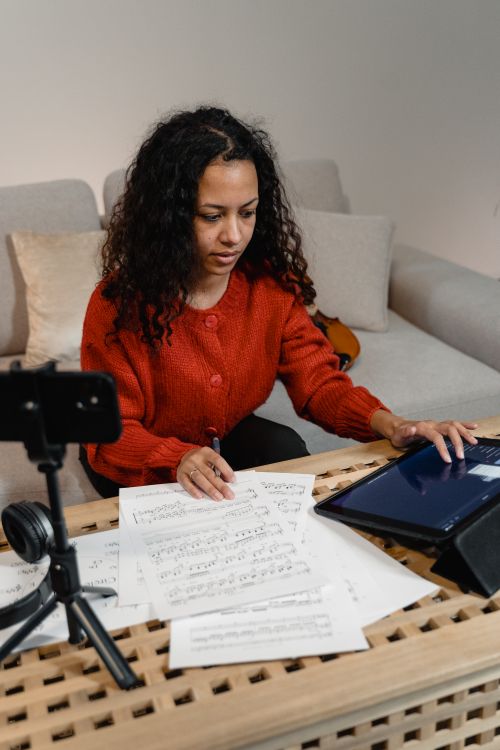
If the learner is preparing for a separate graded exam as well as GCSE Music, check that exam board’s current syllabus independently; school GCSE requirements and music-board syllabuses are not interchangeable.
Build a revision plan from the actual specification
Ask the school for the exam board, specification code and current component requirements before buying a revision book or choosing set works. Put each assessed task and its deadline on one page. For listening, practise identifying a musical feature and then explaining its effect with an audible example; naming an instrument alone is rarely the whole answer. If there is a score extract, mark the bar that supports your claim. Revisit the same short extract a week later to see whether you can explain it without the notes you made the first time.
For performance, record a practice run and note one technical issue and one musical issue: for example, a rushed entrance and a phrase that loses shape. Work on each separately before repeating the complete piece. For composition, bring a short original idea and the school’s task brief; revise the melody, rhythm or structure against those criteria. The tutor can help the pupil understand and improve their own work, but the pupil must create and submit their own assessed material under school rules.
What online support cannot replace
Only the school and awarding organisation can confirm the live deadlines, assessment conditions and permitted resources. A private tutor cannot award marks, certify an exam entry or guarantee a grade. Ask the school how coursework, ensemble participation or practical recordings are handled before committing to a plan. The most useful online lesson ends with one clearly defined practice task and a way to check it next time, not a generic promise to “cover the whole syllabus”.
Lesson options
For families considering online support with Dr Banerjee, a free 15–30-minute one-to-one introduction is available before enrolment or payment. Monthly one-to-one plans are £40 for 4, £72 for 8 or £102 for 12 classes (45–60 minutes each); group tuition is £48 per student for 8 fixed monthly classes (60–90 minutes each). There is no separate group trial. Lesson times are agreed in advance and depend on availability. See fees, the free introduction or contact options; enquiries can also go by WhatsApp to +91 62800 75157 or email to drbnrj@gmail.com.